
For most people, withdrawing cash takes less than a minute.
What many people don’t realize is that behind this simple transaction lies a sophisticated and costly infrastructure. A significant share of cash access today does not come from ATM machines located at bank branches, but from offsite ATMs located in shopping centres, transport hubs, supermarkets, tourist destinations, and other everyday locations. These machines play a critical role in ensuring consumers can access cash where and when they need it.
Operating an ATM involves far more than installing a machine in a convenient location. Maintaining an ATM network requires ongoing investment in connectivity, compliance, technology, security, cash management, and operational support.
According to The Future of ATM Economics: Ensuring Sustainable Cash Access in an Evolving Market, published by Datos Insights, the direct operating costs of an offsite ATM are distributed across several key categories, each contributing to the availability, functionality, and security of the service.
What Happens Behind Every ATM Withdrawal?
When you withdraw cash from an ATM, the transaction takes only a few seconds.
What most people do not see is the vast network of infrastructure, logistics, technology and expertise working behind the scenes to make that moment possible.
Every withdrawal represents the culmination of years of investment, sophisticated systems, dedicated operational teams, and a broad ecosystem of service providers working together to ensure cash is available exactly when and where consumers need it.
What may appear to be a simple transaction is, in reality, the final step in a highly coordinated process designed to keep cash secure, accessible, and reliable.
Here is a closer look at what happens behind every withdrawal.
1. Connecting You to Your Bank
Before cash can be dispensed, an ATM must communicate securely with financial institutions and payment networks.
Every transaction is authenticated, authorized, and processed in real time. This requires a sophisticated combination of transaction processing platforms, telecommunications infrastructure, network connectivity, and payment scheme integration.
Maintaining this connectivity requires continuous investment in technology, systems, and operational expertise to ensure transactions are completed quickly, accurately, and securely, every hour of every day.
2. Meeting Ever-Evolving Regulatory Standards
Operating an ATM network is about much more than keeping machines running.
ATM operators must continuously adapt to changing regulatory requirements, security standards, and industry mandates. This involves ongoing software upgrades, compliance monitoring, operational controls, cybersecurity measures, and risk management processes designed to protect both consumers and financial institutions.
Compliance is not a one-time exercise. It is a continuous commitment to maintaining trust, security, and resilience across the entire network.
3. Creating a Reliable ATM Location
An ATM solution extends far beyond the visible terminal.
Selecting the right location requires careful planning, site assessments, access to power and telecommunications infrastructure, installation expertise, and ongoing operational support.
Once deployed, each ATM must be monitored, maintained, and managed throughout its lifecycle to ensure it remains available to customers.
Providing convenient access to cash requires substantial investment in infrastructure, equipment, connectivity, and physical locations, all of which must operate seamlessly day after day.
4. Ensuring Cash Is Available When You Need It
One of the most complex aspects of ATM operations is ensuring that every machine has the right amount of cash at the right time.
To achieve this, operators continuously analyze transaction patterns, seasonal trends, local events, and consumer behavior to forecast demand and optimize cash levels across the network.
The challenge is balancing availability and efficiency.
Too little cash can result in service disruptions and customer frustration. Too much cash can increase funding costs and tie up capital unnecessarily.
Once cash requirements are determined, a highly coordinated logistics process begins. Banknotes must be sourced, counted, verified, processed, transported, and securely loaded into ATMs.
This involves cash management specialists, cash processing centers, cash-in-transit providers, and network operations teams working together to maintain uninterrupted service.
In addition, the cash held inside ATMs represents a significant financial commitment, requiring operators to continuously balance availability with efficient capital utilization.
5. Keeping the Network Running 24/7
ATM networks operate around the clock and require continuous oversight.
Specialized monitoring systems track machine availability, connectivity, transaction activity, and operational performance in real time. When issues arise, support teams must diagnose, repair, and resolve them quickly to minimize downtime.
Regular maintenance, software updates, hardware replacements, and technical servicing are all essential to delivering a consistent customer experience.
Keeping thousands of machines operational every day requires a combination of advanced technology, skilled personnel, and well-coordinated support processes.
6. Protecting Every Transaction
Security is embedded into every aspect of ATM operations.
From encrypted communications and cybersecurity controls to anti-skimming technologies, surveillance systems, fraud detection tools, and physical cash protection measures, ATM operators invest continuously in safeguarding consumers and their transactions.
Comprehensive insurance coverage and risk management programs further strengthen the resilience of ATM networks.
Maintaining consumer trust requires constant vigilance and ongoing investment in both physical and digital security measures.
The Economics Behind Every ATM Withdrawal
The cost of an ATM transaction extends far beyond the simple act of dispensing cash.
Behind every withdrawal is a complex ecosystem of technology providers, telecommunications partners, security specialists, cash logistics companies, maintenance engineers, processors, compliance experts, and operational teams working together to deliver a seamless experience.
Most consumers see only a few seconds at the ATM.
What they do not see is the infrastructure, expertise, and ongoing investment that make those few seconds possible.
Operating an ATM network requires continuous investment across multiple areas. Machines must be installed, connected, monitored, maintained, replenished with cash, secured against physical and cyber threats, and kept compliant with evolving regulatory requirements.
These investments support a service that consumers often take for granted: reliable access to cash whenever and wherever it is needed.
However, understanding ATM economics requires looking beyond the total cost of operating an ATM and considering an equally important metric: cost per transaction.
Many of the costs associated with operating an ATM are incurred regardless of how many withdrawals the machine processes. Site rental, equipment depreciation, telecommunications, monitoring systems, maintenance, security measures, software support, and compliance activities must all be funded whether an ATM processes hundreds of transactions or thousands.
As a result, transaction volume becomes one of the most important determinants of efficiency.
An ATM that serves a large number of customers can spread these fixed and semi-fixed costs across more transactions, resulting in a lower average cost per withdrawal. Conversely, an ATM processing fewer transactions must recover many of the same underlying costs while handling a smaller number of withdrawals, leading to a higher average cost per transaction.
This dynamic is common across many infrastructure-based industries. Significant upfront and ongoing investments are required to deliver the service, but the economics improve as utilization increases.
For ATM operators, transaction volume is therefore critical to long-term sustainability. High-utilization locations help maximize the value of investments in technology, infrastructure, security, and cash management while enabling operators to provide reliable access to cash at a lower average cost per transaction.
Ultimately, every ATM withdrawal reflects far more than the cost of dispensing banknotes. It represents the combined investment in technology, infrastructure, security, compliance, cash logistics, and operational expertise required to make cash available on demand.
The next time cash appears at the touch of a button, it is worth remembering that behind that simple transaction lies a sophisticated network of people, technology, and infrastructure working around the clock to keep cash secure, available, and accessible whenever it is needed.
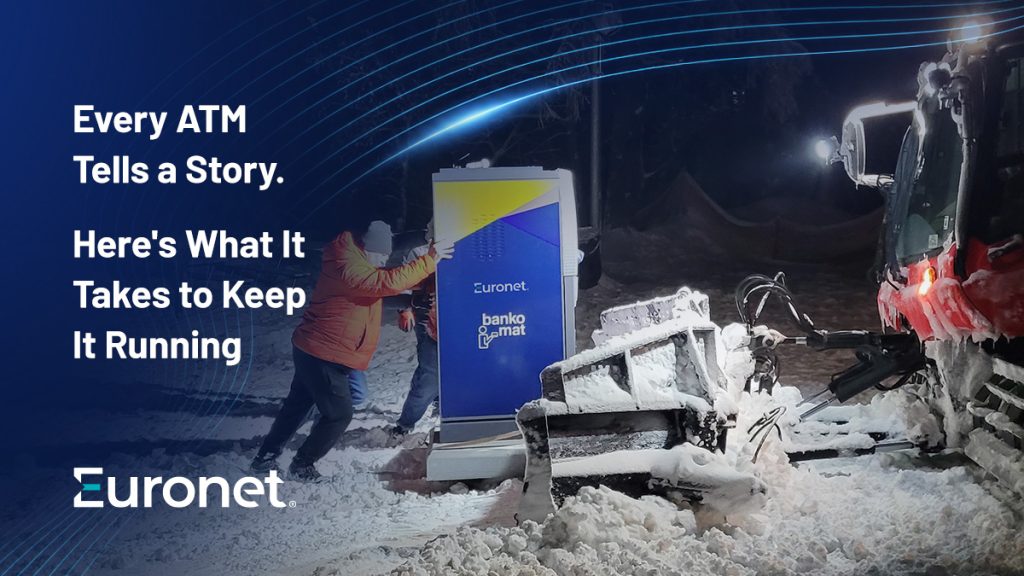
Every ATM tells a story. And behind every withdrawal is an entire ecosystem making it possible.
